
Benissa, Spain: Travel Guide
Small coves, trails, years of history and culinary traditions are some of the things to see in Benissa, Spain, a picturesque locality of Marina Alta in the heart of the Costa Blanca of Alicante, which has become popular and it is much more tranquil than some of the neighboring cities.
For years, Benissa has been dedicated to rainfed agriculture, in which people don’t use artificial irrigation but rainwater exclusively (pretty scarce in this area). Several years ago, tourism became part of the activities in Benissa. And, if we stop to contemplate its environment, it is easy to know why.
In a short period of time, it became one of our top destinations. In this article, I’m going to tell you the main spots in Benissa, how to get there, its best beaches and coves, and the activities we enjoyed the most in this beautiful spot on the Alicante shore. Let’s go!
Benissa Town VS Benissa Coast
Before I begin, you should know that the area of the old town of Benissa isn’t by the sea but by the mountain, about 10 km from the coast.
This is an important detail to bear in mind so that you don’t go through what happened to us the first time we visited Benissa by tram thinking we would come across the beach we have heard about so much (spoiler: we ended up at the station in the middle of the countryside, about 2 km from Benissa town and 8 from the sea).
And if you’re wondering, both areas are worth visiting.

How to get to Benissa, Spain?
Benissa is 72 km to the North East of Alicante and 115 km to the south of Valencia. More specifically, it is located between Calpe and Moraira, so visiting Benissa is easy to add to your plans if you’re visiting any of these destinations on the Costa Blanca.
To get there, the best way is by car. You can easily access it through the mediterranean highway AP-7 that has an exit to Benissa or algo through the national route N-332.
If you don’t have a car, you can access the beach by public transport. The tram of Alicante passes by Benissa and there are also ALSA buses.
Even though we used both, they are not very comfortable.
Benissa tram station is in the middle of the countryside and you have to walk 2 km to get to Benissa town. It is also not that close to the beaches.
The buses that pass by Benissa town are super slow since they stop at every town. We also used the L3 bus line of the Calpe to Teulada transport, and we thought this one was a good alternative to go to the beach area of Benissa.
⭐ If you’re staying at Benidorm, Altea or Calpe, there’s a tour that takes you to Benissa and Moraira in a day. ➥ BOOK IT HERE!

Where to stay
The town is far from the beach area, so you should first define what you would like to visit in Benissa. Plus, you should also take into account if you’re going to have a car or not.
Baring these things in mind, there are three interesting hotels to take into consideration:
Another option would be staying at a nearby locality and visiting Benissa during the day. In this case, you could choose to stay in Altea or look for an accommodation in Benidorm or Calpe, for instance.
The best 6 beaches in Benissa
Let’s talk about the coves and beaches of Benissa from South to North.
An excellent way of visiting these coves if by taking an ecological tour of Benissa, which allows you to get to almost all of them on foot (except the last one).
1. Les Bassetes Cove
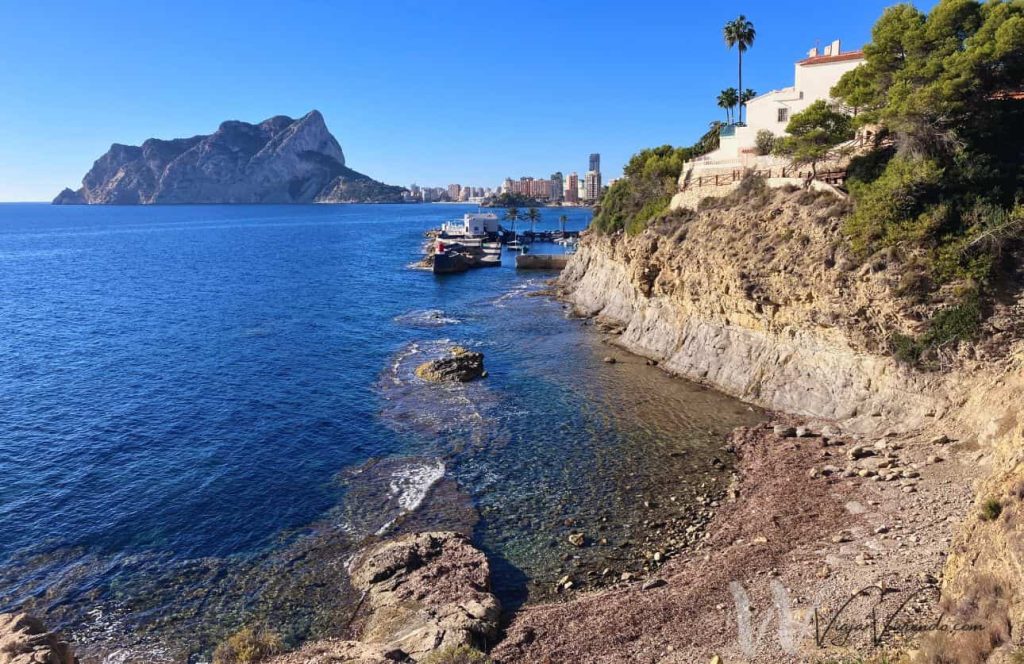
This cove is in the limit between the beaches of Calpe and Benissa. It is right next to the sport port where there are two restaurants and a diving school.
It is rocky, with calm and clear waters, ideal for snorkeling or water sports such as kayaking, which you can rent right there.
There’s a stair from where you can access the water as if it was a pool with spectacular views to Peñon de Ifach and Calpe.
If you’re looking for a beach to see the sunset from, this could be an excellent option.
If you’re going by car, you’ll have to bear in mind that the parking lot is small, so you have two options: getting there early to get a spot or leaving the car on the street above.
2. Playa Fustera beach
This small sandy beach of less than 150 meters long, is one of the places you must see in Benissa, since it is the most famous cove of the locality.
And you’ll see why! The environment is gorgeous: thick golden sand, turquoise and cristaline water, cliffs by the side, green vegetation that reaches near the shore,and low white houses in the surroundings.
Plus, it is a great beach to snorkel in and to see the posidonia meadows.
The beach has all the services during high season, and the rest of the year there’s a place to eat called Mandala Beach bar.
There are also benches with tables ideal for picnics under the pine trees.
Since it is the most famous beach in Benissa, during the summer it can get packed. In fact, we saw the beach get crowded on weekends during low season.

3. Pinets Cove
This pebble cove has three details that, to us, make it specially beautiful: the vegetation that reaches super close to the shore giving it a gorgeous green landscape and an area where a shallow natural pool is formed.
And the third one? The spectacular views to Peñon de Ifach in Calpe.
The parking lot of Pinets Cove is about 100 meters from the beach and it is wide, though there are some signs warning it is an unsupervised area and recommends not leaving anything of value inside the car. Anyways, we will always recommend you do this, wherever you go.

4. Llobella Cove
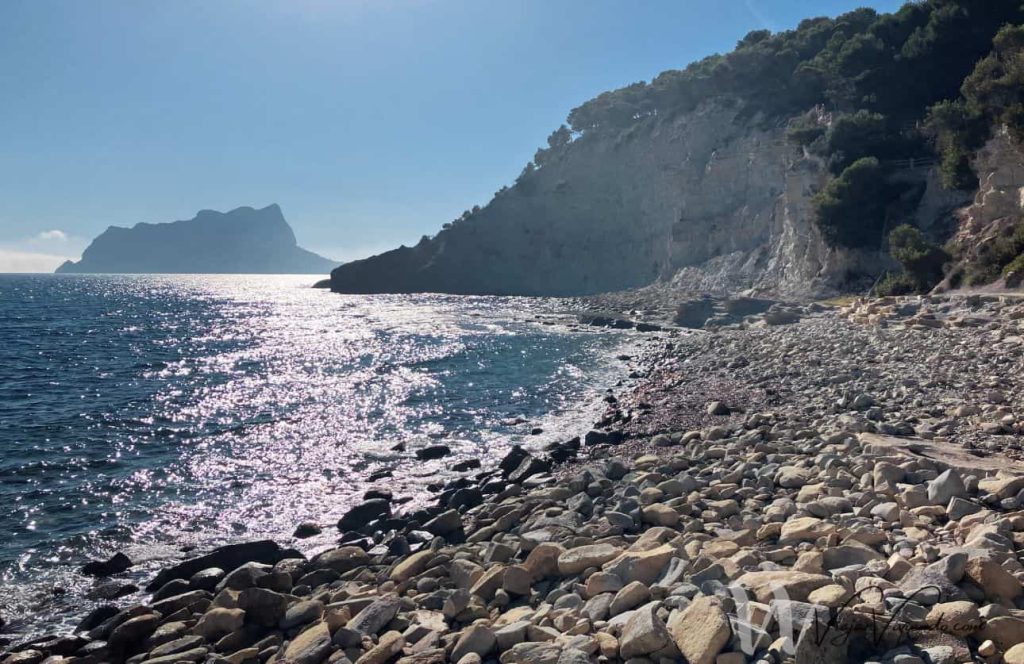
This 300 meters cove has a cliff and there are pine trees that almost reach the coast.
There are big rocks so it could be a bit uncomfortable to move around. To get to the water it is best to have water shoes.
The parking lot is small even if it is a much calmer beach than the ones around it.
The beach doesn’t have services and there are signs warning about rock falls from the cliffs.
5. Cala Advocat beach
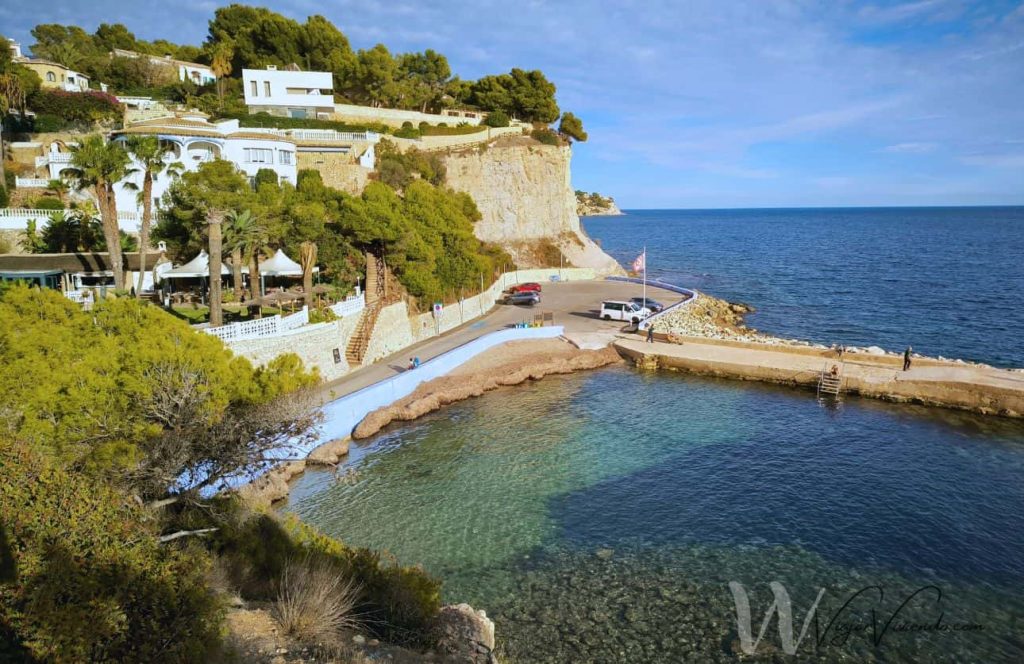
This cove feels like you’re going into a sea pool since it has a breakwater on a side with metallic stairs to get to the water.
Advocat Cove has a narrow beach strip and very few waves, which makes it ideal for traveling with kids or if you like snorkeling.
It is super small so it can get crowded fast.
There’s a small parking lot and three beach bars where you can get something to eat or drink during high season.
6. Baladrar Beach
This pebble cove is divided in half by a rocky entrance, which forms the Baladrar and la Goleta coves.
From the shore, you can see Peñon de Ifach in the distance, and to the south it ends in a 30 meters high cliff.
Its clear water makes it perfect for snorkeling.
Even though the parking lot is big, in summer it could be difficult to find a spot.

Ecological tour of Benissa: Trail on foot
To us, the best way to go around the beaches in Benissa is by taking the ecological route: a walk on foot through trails that go to the coastal area and that most of the time go by the sea, offering spectacular views of the beaches and the environment.
In fact, we believe that probably the best thing about the beaches of Benissa is getting to them this way. So much so, we didn’t get tired of going through the ecological walk over and over again.
Plus, along the route there are information panels explaining the flora and fauna of Benissa Coast, the history and many more interesting facts, which make it an ideal plan for the whole family.
The walk covers the beaches of Benissa, but you can start in Calpe without a problem. Instead, towards Moraira there is no ecological trail and there are trails that are complicated to do on foot because you have to go to the route with little room for pedestrians, so we don’t recommend this.
From Les Bassetes to Cove del Pinets, the walk is by the sea, and from Cove Pinets until you reach Advocat Cove, the trail goes inside old rural roads and streets.
The only trail you can’t do in the walk is the last one that goes from Advocat Cove to Baladrar Cove, since the walk only reaches a park halfway through and then you have to go into the route.

Things to do in Benissa, apart from the beach
Apart from visiting the beaches and going through the ecological walk, which is one we consider is a must do, there are other things to do in Benissa to make a complete trip to this destination.
1. Visiting Catedral de la Marina
The church dedicated to Puríssima Xiqueta, patron of Benissa, is also known as Catedral de la Marina. Its construction took almost 30 years and it was completed in 1929.
2. Old town of Benissa
The medieval style old town of Benissa is said to be one of the best kept in the whole Costa Blanca.
One of the prettiest streets of Benissa to walk along in its entirety is Purissima street, from the City Hall (also worth visiting the school in front of the park which was formerly a convent) to the convent of Benissa on the other side, a building which used to be a Franciscan monastery.
It is also worth stopping at number 24 of this street, where you can see the House of Juan Vives. According to some anecdotes, this is where two peregrines stayed and as a show of appreciation gave the owners of the house the image of Purissima Xiqueta, which in time started working miracles, so in 1864 she was proclaimed Patron of Benissa.
Then, the best thing to do is walking along the surroundings of this street, enjoying the buildings of Benissa old town. For instance, on Desamparados street you can see how a noble family of the year 1800 lived like, at the Abargues House Museum.
The historical center of Benissa is pretty small and you can see everything in an hour or two tops.
3. Scuba Diving
The coast of Benissa with its small coves, cliffs and excellent visibility, makes it an ideal spot for snorkeling and exploring the bottom of the sea. This is why 6 scuba diving routes have been made in Benissa to see the rocky bottoms and the posidonia meadows.
4. Trying traditional dishes at the restaurants of Benissa
Some traditional dishes are putxero de polp or cured meats, among other local traditional recipes, so it would be a great idea to complement your trip to Benissa to try them at the town restaurants.
Cuina de Dos or Restaurant Giro are good alternatives for having a bite in the town, or also Nou Tapas Vizcaino which has good prices.
To eat right by the beach, you could go to Mandala Beach Bar at La Fustera.
What to see near Benissa
There are places near Benissa that are worth visiting. Some are more popular and touristy, and others are smaller:
- Calpe: Famous for Peñon de Ifach, which is super close to Benissa.
- Moraira: An exclusive destination of the White Coast and short distance from Benissa.
- Altea: One of the prettiest towns of Spain.
- Denia: One of the most important cities of the area. ➥ Book a kayak tour from Denia.
- Benidorm: The city of skyscrapers in the Costa Blanca.
- Jalón: A place known for its wines. ➥ Book here a tour from Benidorm, Altea or Calpe.
- Gata de Gorgos: A destination sought for its wicker crafts.

FAQs about Benissa in Spain
How many coves or beaches are there in Benissa?
There are 6 coves or beaches in Benissa along 4 kilometers of coast.
What are the beaches in Benissa like?
Most beaches and coves in Benissa are of pebble or of different sized rocks. Some coves even have large rocks. But there are also a couple of sandy beaches which are, logically, the most visited. You will not find secret coves in Benissa, but if you go to the ones that are more difficult to access, you’re going to find quieter beaches.
Is Benissa worth visiting?
Of course! It is one of our favorite places on the Alicante coast.
How many days to visit Benissa?
It can be visited as a day trip from another city in the area, although it is best to dedicate at least two days to visit the old town of Benissa and take the ecological trail enjoying some of its beaches and coves.
Map to visit Benissa
I hope this Benissa travel guide was useful to plan your trip. Do you have other suggestions for cool places to visit in Benissa that I missed? Let me know in the comments!
